







Winds are labelled with the direction they have come from, not the direction they head towards, but why?
A Westerly wind has come from the west and is heading east. An easterly is heading from east to west.
It is an odd habit, when we stop to think about it.
Surely, we should talk about the direction the wind is heading, not the direction it has arrived from? We label most broad movements – water currents, clouds, migrations – with their destination heading, why not winds?
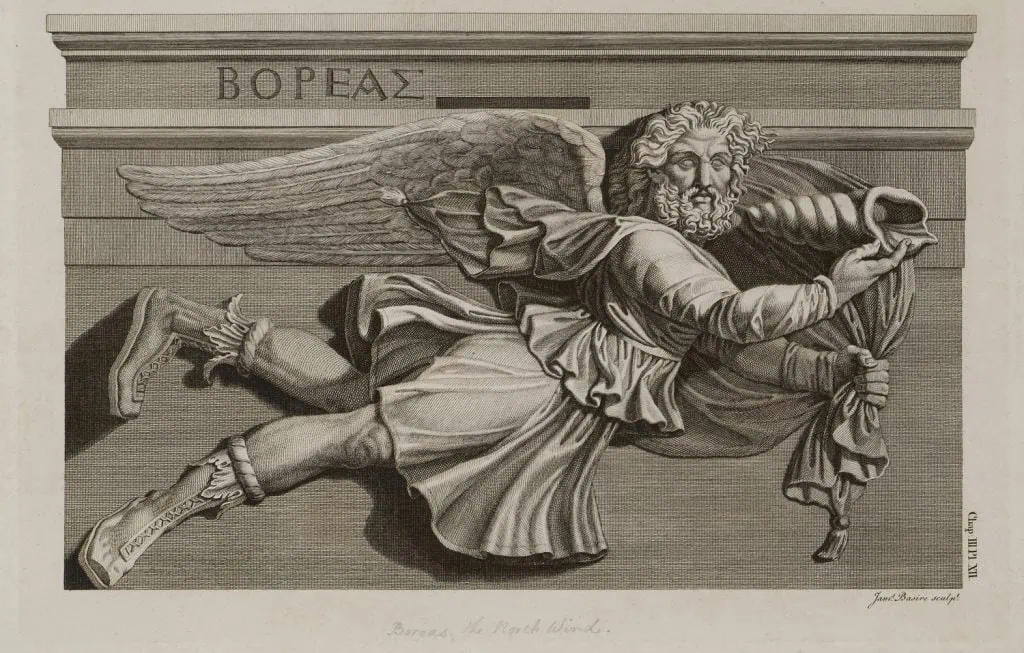
The ancients recognised winds from the character that they picked up on their journeys, it gave them an identity. Boreas, the north wind, both had character and was a character, a cold one. The modern approach, even amongst the weather-aware, is to layer meaning onto the wind once we know its direction. The forecaster tells us to expect a warmer than normal day thanks to the southerly winds, but the ancients viewed things differently. They sensed the nature of the wind and this gave them insight into its origins and therefore the direction it blew. This had practical implications when travelling across a featureless seascape – put the hot dusty wind on your back if you’re hoping to sail north.
I once collected sand from the base of the sails when off the coast of Africa – it took no technology to sense that these winds blew away from that continent, not towards it.
The character and direction of the wind has seasonal implications in many parts of the world too. A shift from wet to dry season in places that experience monsoons, for example, is marked by a change in prevailing wind direction and its character.
For more on this, please see The Natural Navigator book.
You might also enjoy:
Navigating with Sheep Shelters
The Secret World of Weather – The Book