






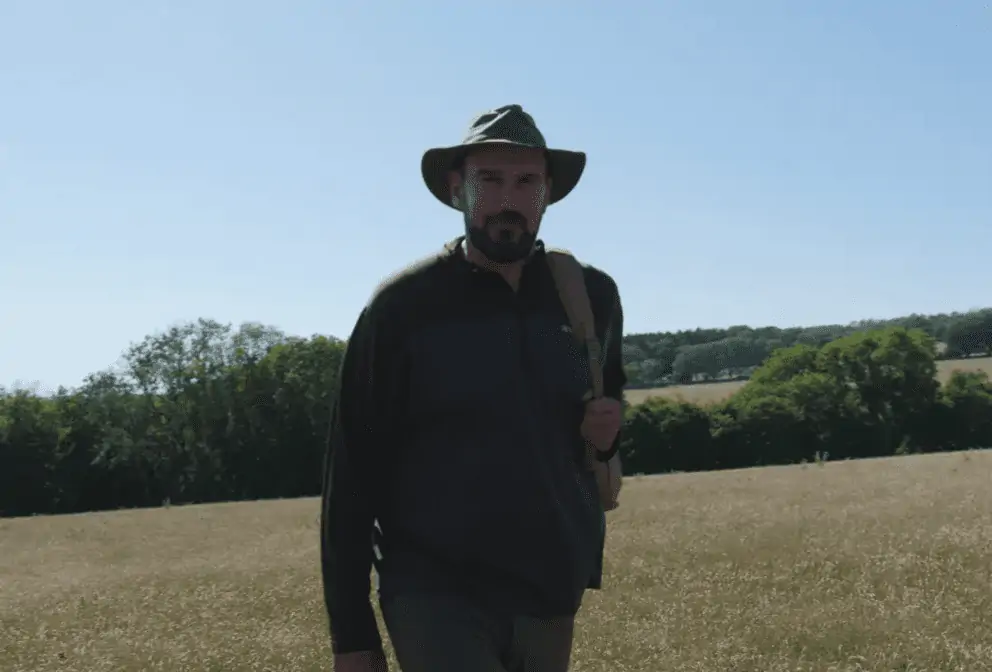
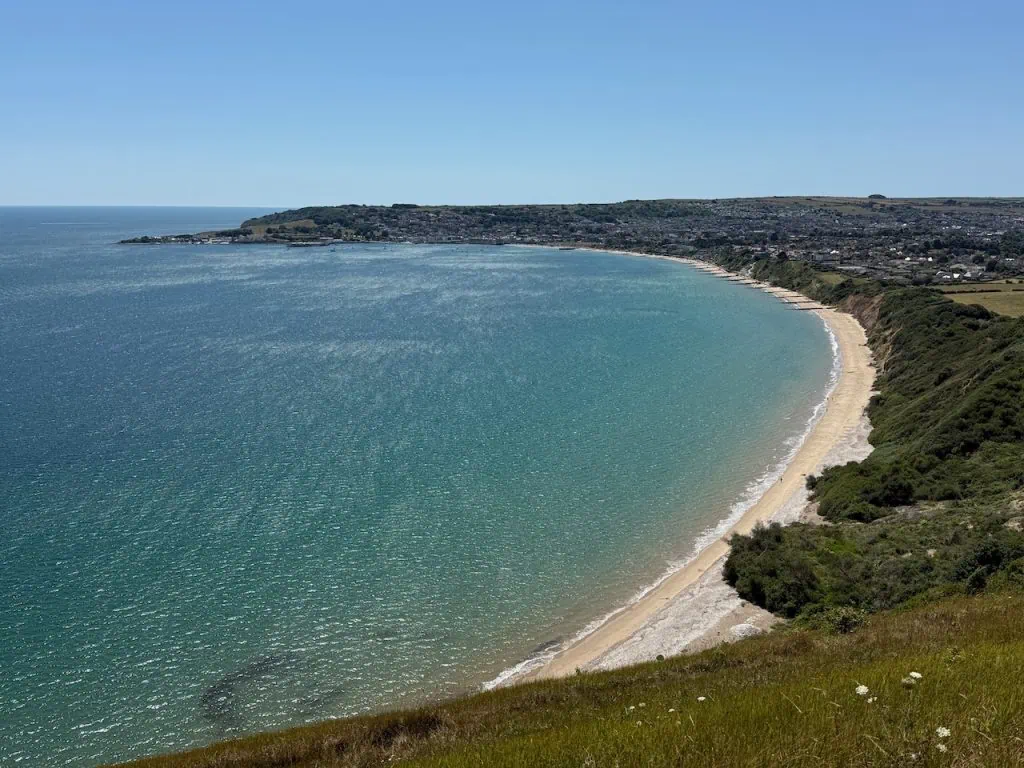
I’m just back from a few days’ natural navigation walks in Isle of Purbeck in Dorset.
My forays into fresh terrain often adopt the same strategy: identify a handrail, leave a handrail, explore and scour the area for fun signs in land, water or sky, then return to a ‘handrail’ and turn to follow it back to my start point. A handrail is any linear feature in a landscape that we can identify and follow easily: a railway line, a road, a mountain ridge, a river, a forest edge… Sometimes these trips take five minutes, sometimes five days, normally nearer the former than the latter. There is a reason that I follow this approach, it is the one that works most dependably.
For many few years, I thought that if I trained myself to be skilled enough, then natural navigation would work in a point-to-point way. Start at Point A, use nature’s signs to follow as straight a path as possible to Point B. It’s such a lovely idea, but it doesn’t work dependably and that is why no navigators before instruments would choose it and indigenous navigators never do now. The problem is that if we miss point B by a few degrees our plan can start to unravel quite spectacularly. The best navigators never think in a point-to-point way, even when they have an electronic map in front of them, because it means ignoring the clues along the way. They improve the experience and safety by thinking about and sensing a bigger richer picture – and then leaning on lines.
Natural navigation can be remarkably accurate, especially with clear skies, but it works best when we pair signs with lines. A beginner can find a coastline using the sun after thirty seconds’ training (follow your shadow to the north coast, turn right, see you in the pub for lunch).
I’ve spent decades doing natural navigation exercises and challenges and I couldn’t promise to find Point B every time on cloudy days without using a line in the landscape. The joy of handrails is that it allows us to be more effective with less effort. It turns natural navigation from a difficult piano exam into a more of a jazz session.
On my latest walk in Dorset, I had a bulletproof handrail in the northern edge of the lake below me. I knew that I could set off and explore in a carefree way, then find my way down to the lake and then turn left and I’d be reunited with my car. The fun thing is that it works even when we don’t know exactly where we’ve been in the intervening hours. So long as we know how to find the handrail and which way to turn on reaching it, we can get the navigation saxophone out and explore with a carefree smile.
For the full set of photos and videos of my favourite clues and signs from my week in Dorset and 53 other journeys, please join as a Member and view The Collection. Members can click here.