






Watch the video above and study the patterns in the water.
How many different wave patterns can you spot?
What causes them and what do they reveal?
Aim to spot and decipher at least four patterns. I will list my 10 favourites at the bottom.
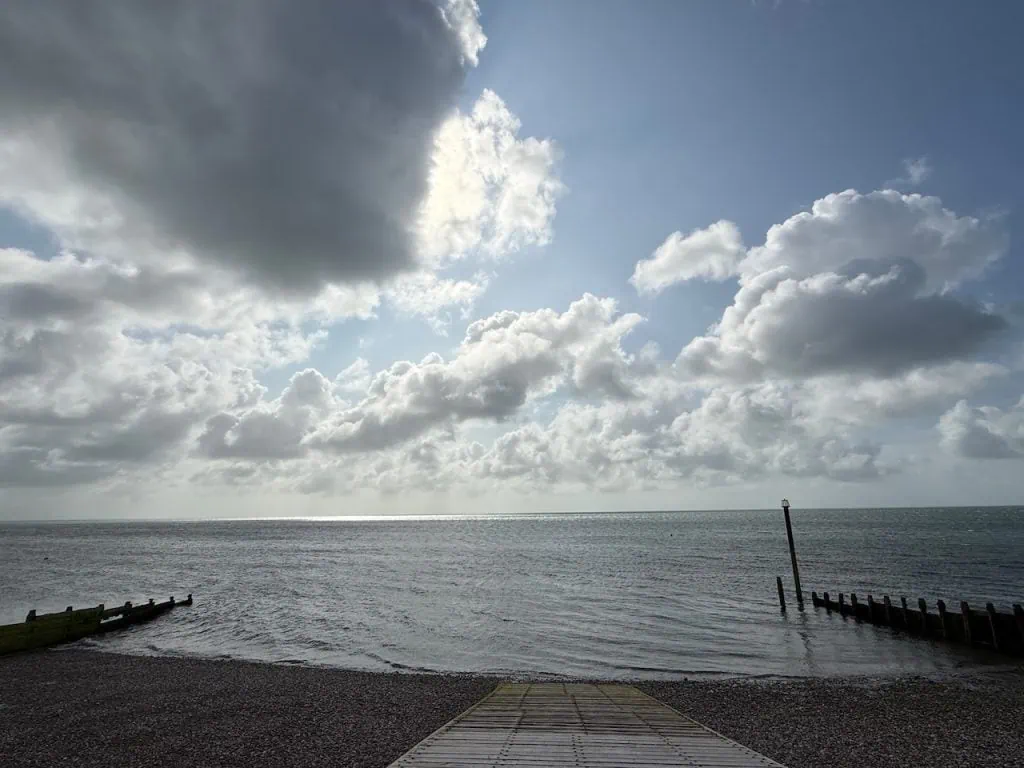
Here is a still photo, in case that helps with some areas:
(Clues below, but spoiler alert, answers are on this page, so don’t scroll down until you’ve had a go.)
Cryptic Clues…
One of the great joys of reading water is that the patterns are global, universal even. Once we learn to see them on one scale, we start spotting them on every scale. The reflection from the end of a bath is not so different from the waves that bounce back off a harbour wall. Or Waimea Bay.
Think about the wind. The journey it has been on. The places it has been and has not.
Does the water love the land?
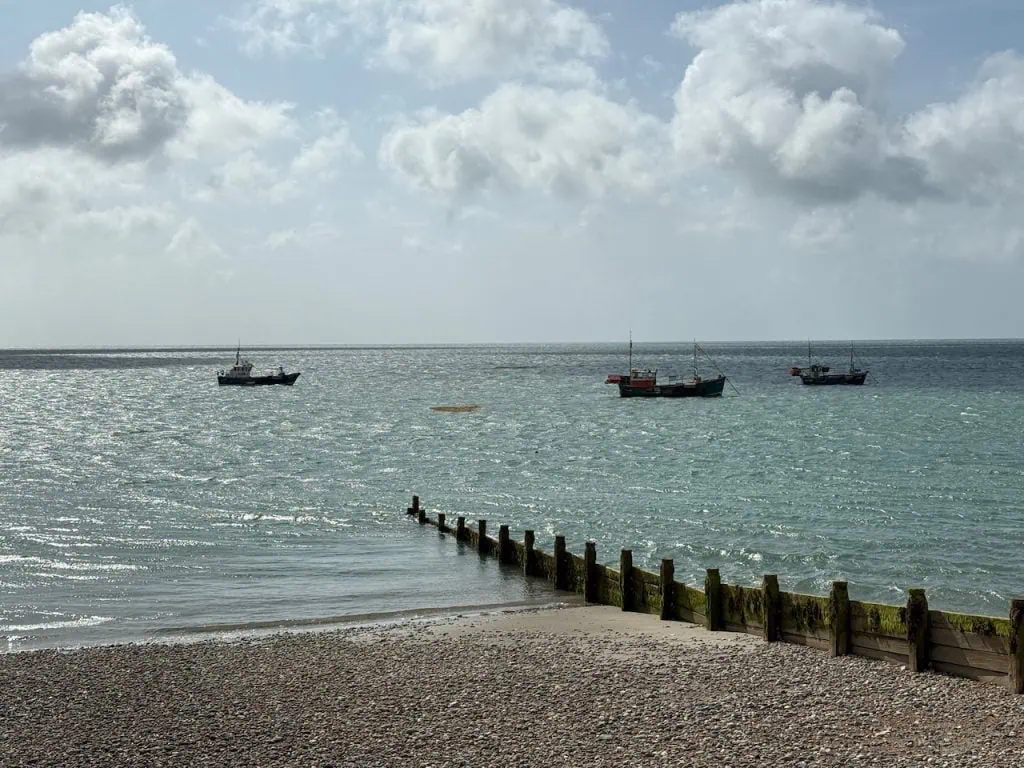
This is just a pretty picture of the same coastline at the same time. One of the patterns is very clear here, but it’s mainly here to space out the page – so that you don’t see the answers accidentally before you want to. There is also a clue to one of the hardest to spot patterns in the video.
The Answers…
Before I list the patterns, have a look at this photo, in case it helps focus your eyes on anything you might have missed:
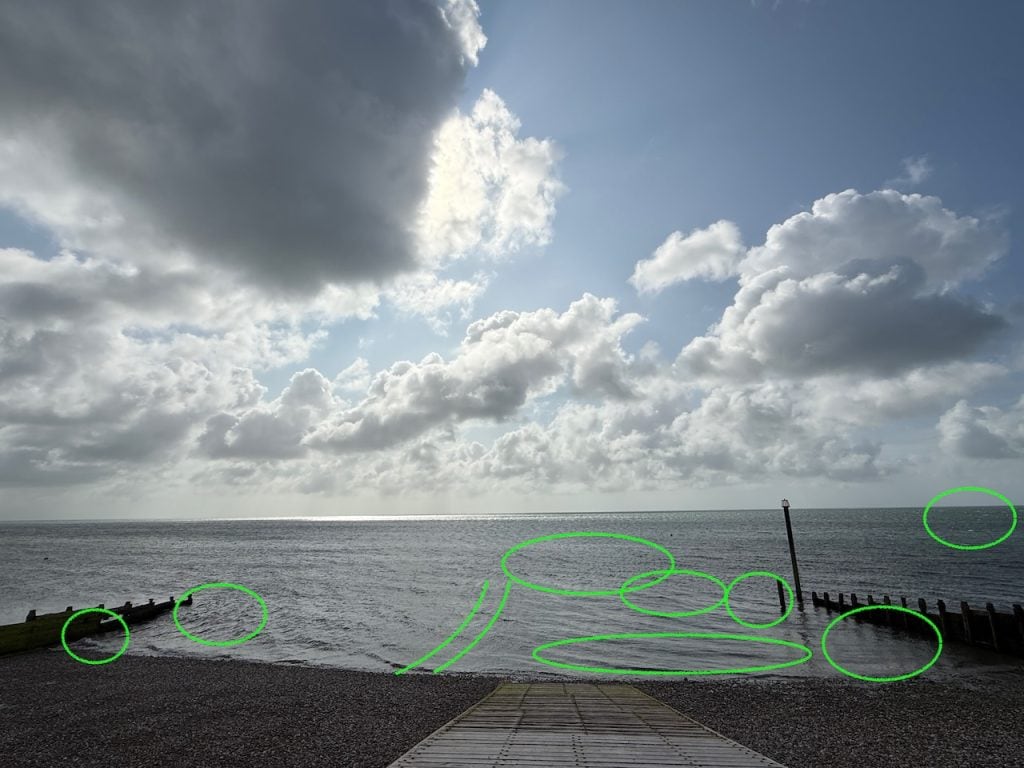
OK, here we go!
There are enough intriguing patterns in this scene to keep us happily busy for a week, but life will conspire to get in the way, so I’ll limit it to my 10 favourites…
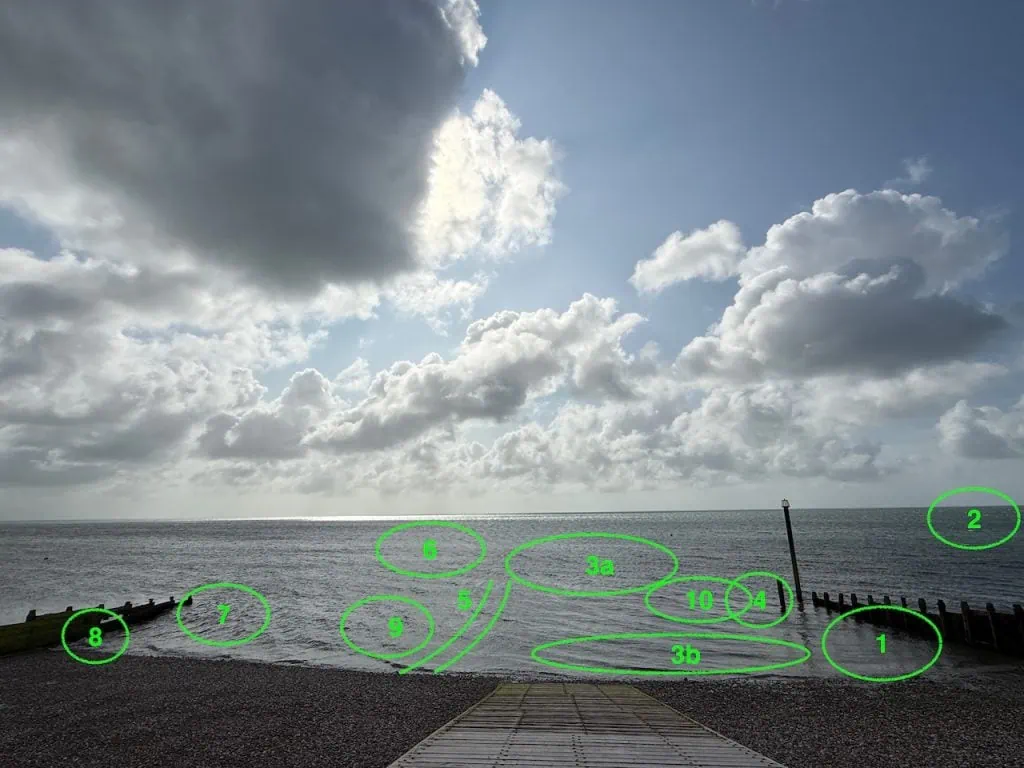
- A wind and wave shadow. This is where the wind and waves can’t reach, leading to a calmer zone. This is the only place we see clear reflections.
- Open water, the wind can blow a long distance over the water uninterrupted (greater “fetch“), leading to the biggest waves and “white horses“.
- a & b. The waves slow down and bend towards the shore (refraction).
- Diffraction. Waves fan out as they pass obstructions.
- Smaller waves reflecting back off the groyne on the left.
- Wind and current moving in the same direction. It is hard to articulate, but this is something that sailors come to recognise. Wind against tide leads to rough, bumpy water and choppy waves. There is a smoothness to these waves that is only possible on windy days like this when the wind and tide are moving in the same direction.
- Interference patterns. The waves reflect back off the groyne, meet incoming waves and these two superimpose and create a rougher patch of water.
- The groyne takes some of the energy out of the breaking waves, but it also funnels the waves, creating a unique shape to the breaking waves here. (The opposite effect can be seen on the right, near no.1, also).
- Ripples from wind gusts. There is a difference between the long, medium and short term effects of the wind on water. Long term = swell. Medium term = waves. Short term = ripples. We are seeing the ripples blowing on top of the waves, notice how they appear and disappear, a classic ripple signature.
- The tide is flooding and flowing from right to left (see no.6 and also the moored boats in the second photo). There is a narrow zone just beyond the end of the groyne where the tidal water is moving faster as it is squeezing past the obstruction. This creates a line of waves that look slightly different. A tough one to spot, but it is there.
You might also enjoy:
The Beginner’s Guide to Natural Navigation – Online Course
The Collection – Videos, photos and explanations of my favourite clues & signs
How to Read Water – The Book.