








Church windows were never placed randomly. In medieval and later church design, their position, size, and style followed theological, symbolic, and practical logic. A medieval church was normally oriented on an east–west axis: the altar stood at the east end, facing Jerusalem and the rising sun, while the principal entrance lay at the west. Every major window related to this arrangement, serving liturgical, narrative, and optical purposes simultaneously.
The eastern end of the church — the apse and choir — usually carried the most sacred glass. East-facing windows captured the first light of dawn and were used to illuminate resurrection imagery during morning worship. Because of this privileged position, the glass here was often reserved for Christ, the Virgin Mary, and the church’s principal patrons. Morning sunlight streaming through coloured glass transformed the altar into a visual symbol of divine renewal.
Higher in the nave wall sat the clerestory windows, above the roofs of the side aisles. These were among the tallest and brightest openings in Gothic churches. Their height lifted saints and martyrs literally “into the realm of light,” where individual scenes were less important than the overall atmosphere of glowing colour. By contrast, aisle windows, being closer to eye level, commonly contained more accessible imagery: devotional cycles, guild emblems, donor portraits, and narrative scenes designed for ordinary worshippers to study at close range.
The rose window became the supreme emblem of French Gothic architecture. Descended from the Roman oculus and developed through the Romanesque wheel window, it expanded dramatically from the twelfth century onward until, in some cathedrals, it filled the entire width of the transept or façade. Different phases of Gothic architecture produced distinct styles: the solid geometric plate tracery of Chartres Cathedral, the radiating mullions of Rayonnant Gothic at Notre-Dame de Paris and Basilica of Saint-Denis, and the flame-like curves of Flamboyant Gothic at Beauvais Cathedral.
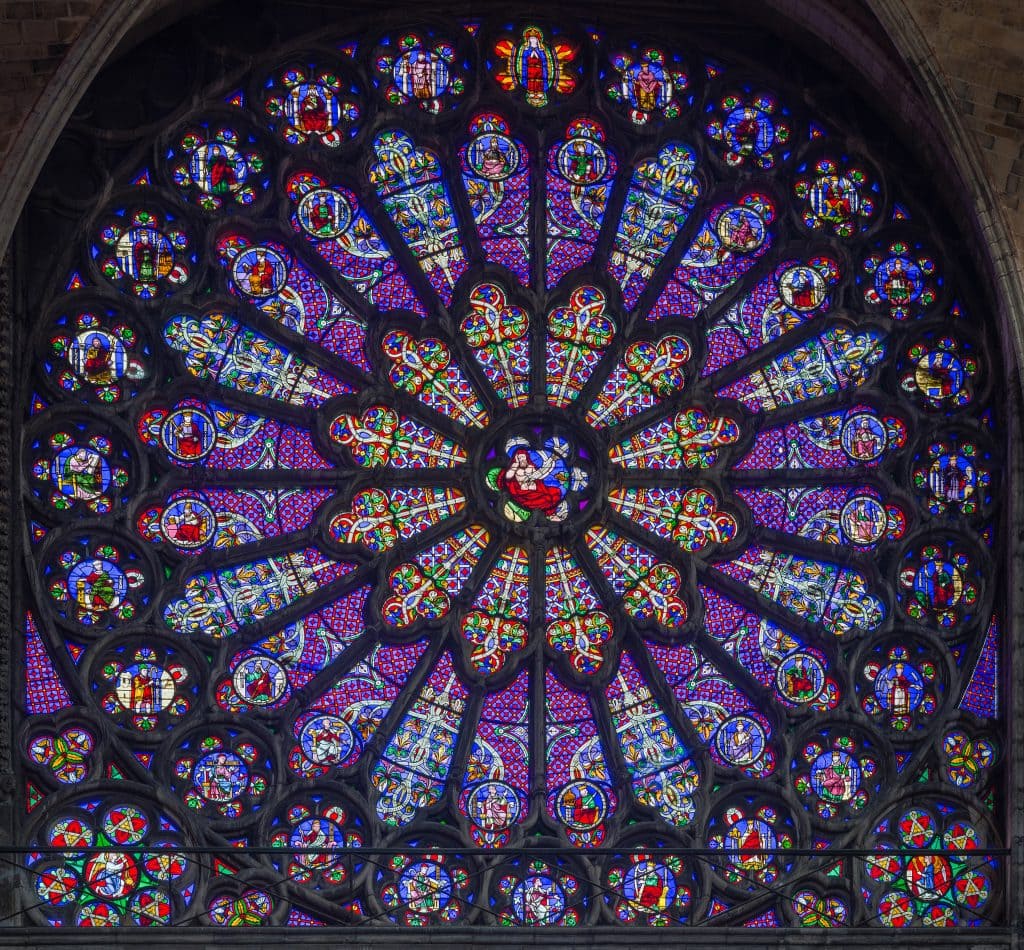
Placement of rose windows was highly coded. The west rose, above the main entrance, frequently depicted the Last Judgement, confronting worshippers as they entered the church. Transept roses balanced the cross-axis of the building, and the north rose — receiving colder, dimmer light — was often dedicated to the Virgin Mary. The circle itself symbolized eternity and divine order, while its radiating spokes suggested Christ’s light spreading outward into the world.
You might also enjoy:
What time is it? A Micro-Quiz Challenge.
The Lost Art of Reading Nature’s Signs – The Book