





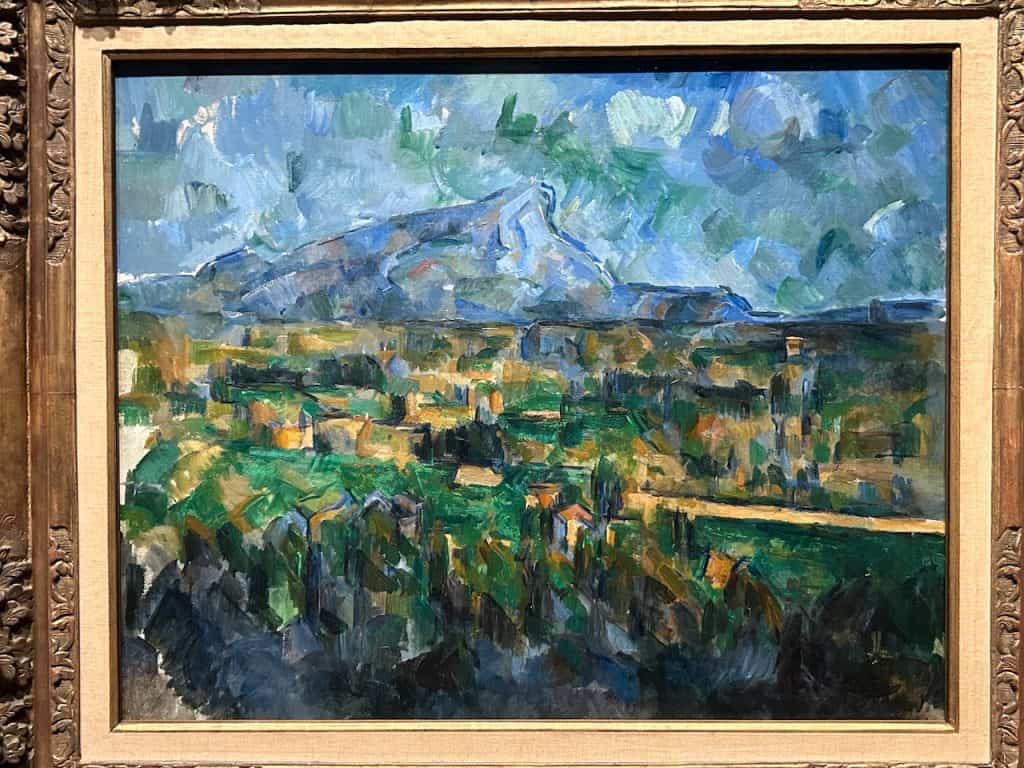
Yesterday I visited the National Gallery with my sister to view the paintings in their latest exhibition, After Impressionism: Inventing Modern Art.
I can recommend the whole exhibition, but it was a personal delight to see one particular painting by Paul Cezanne.
Cezanne painted the view to Mont Saint-Victoire in Provence repeatedly over four years.
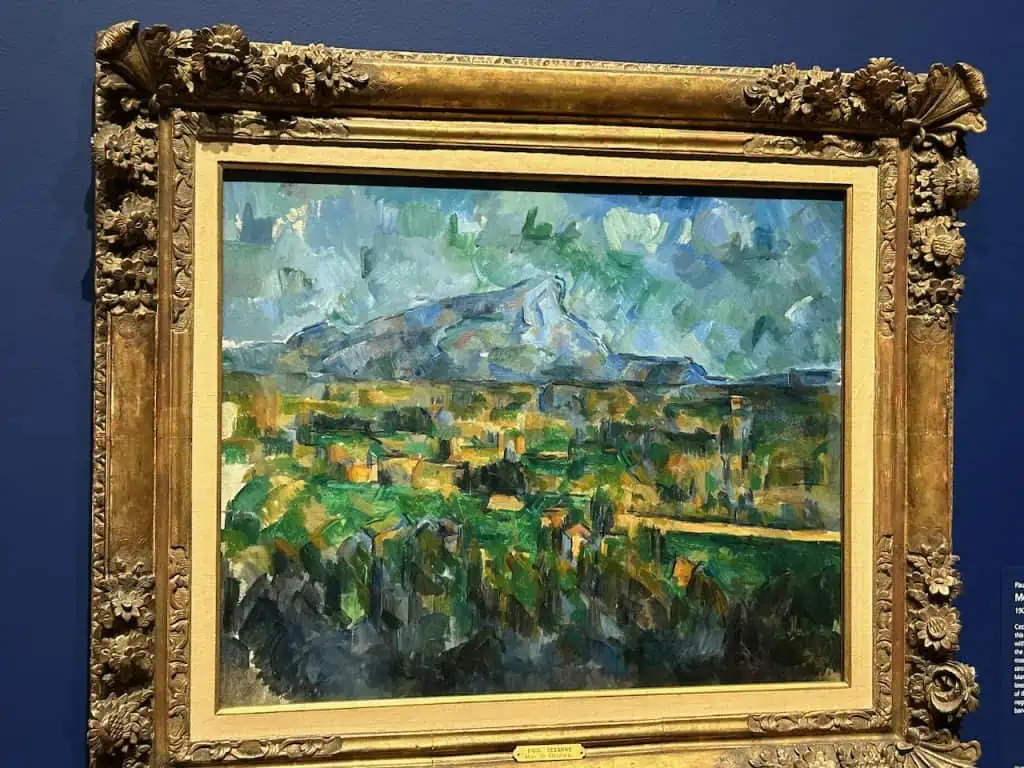
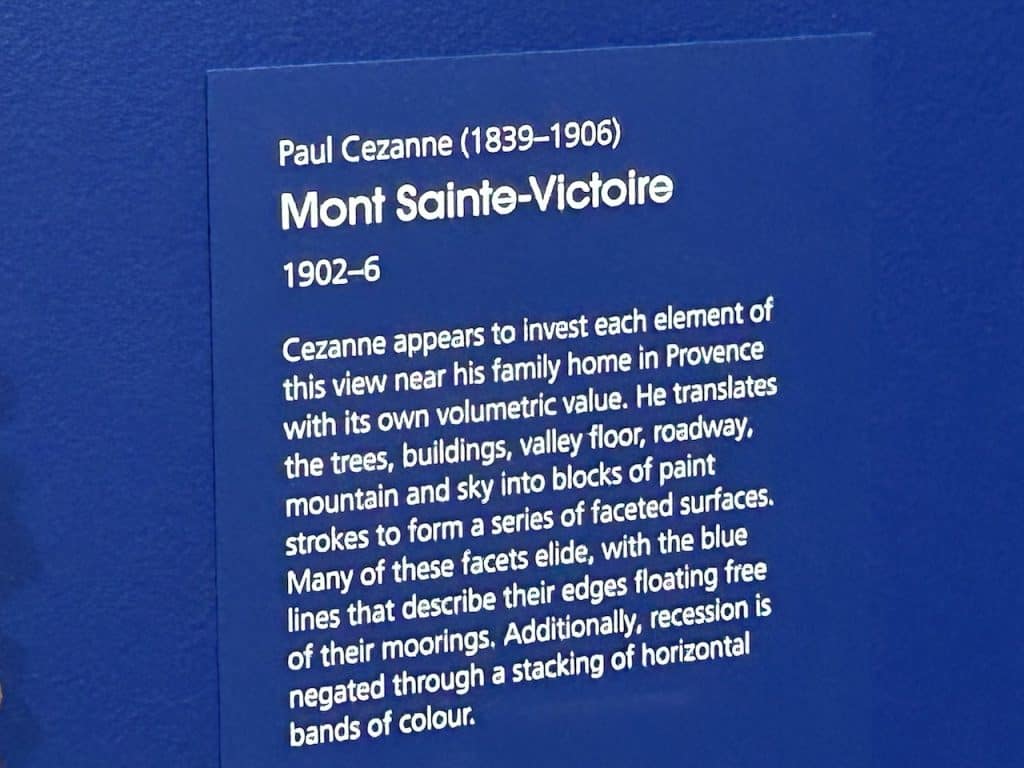
The gallery had something opaque to say about this painting,
“Cezanne appears to invest each element of this view near his family home in Provence with its own volumetric value. He translates the trees, buildings, valley floor, roadway, mountain and sky into blocks of paint strokes to form a series of faceted surfaces. Many of these facets elide, with the blue lines that describe their edges floating free of their moorings. Additionally, recession is negated through a stacking of horizontal bands of colour.”
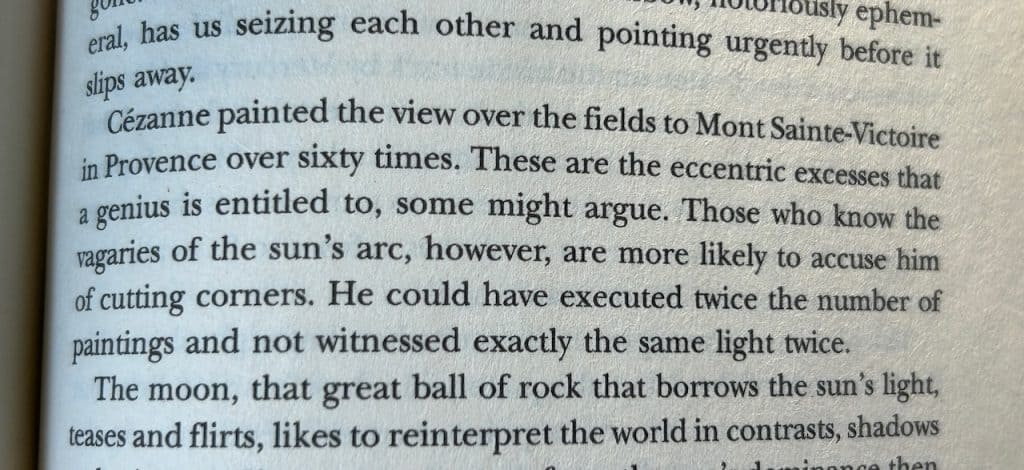
I had a different take on it, as I set out in an earlier book, The Natural Explorer,
“Cezanne painted the view over the fields to Mont Sainte-Victoire in Provence over sixty times. These are the eccentric excesses that a genius is entitled to, some might argue. Those who know the vagaries of the sun’s arc, however, are more likely to accuse him of cutting corners. He could have executed twice the number of paintings and not witnessed exactly the same light twice.”
You might also enjoy:
How Sketching Taught Me to Capture the Spirit of a Tree – A Guest Blog
The Art of Perception in Nature
The Natural Explorer – The Book