





In March I travelled to Rome and Milan to launch the Italian edition of How to Read a Tree (Lleggere gli alberi).
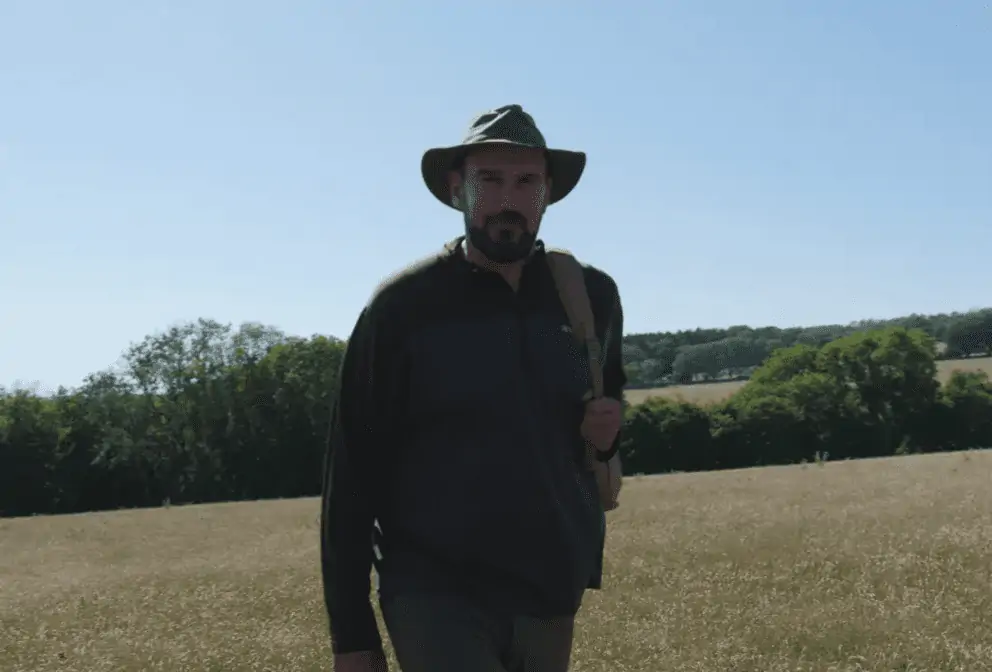
After a talk at the Book Pride book festival in Milan, I met a man called Stefano Lorenzi during the signing. He proved to be a charming tree professional and I asked him if he would introduce himself and his work. And he was kind enough to say yes. Thank you Stefano…

“Arboriculture, it’s my profession, but first of all it’s my passion.
My father was a gardener and taught me the value of observation and patience in front of a tree.
At the age of 18 years old I started to work in a company that was the first company in Italy to import the technique of tree climbing and I start to climb trees for work!
It was a case of slowly falling in love, because tree-climbing, it’s not an immediate, easy technique, and at that time was very difficult to do due to the tools were not studied for that industry.
Through the years the technique and connection between the tree climbers all over the worlds are grow up very fast and the best thing is have tree friends in every country where I climbed trees for work or fun.

Trees have a net-like a roots system which they use to communicate and help each other; for example after a strong storm.
That’s why now to be an Arborist tree climber it’s to be part of a big project for protect and take care about the most important thing for the future of human survival.
In the last 10 years my specialisation is taking care of monumental trees, and trust me, it’s another world, another championship.
The language, the body language of a tree with maybe 300 springs, autumns, winters and summers on its back, it’s something unique.
Understanding what they need is the most difficult and more skills required and the most difficult challenge an arborist has to manage, but… it teaches me a lot of things that are also useful for understanding humans.
You need patience, a listening attitude and a time managing of a tree, so more slow attitude, and sometimes are the exact things we don’t have in front of a human.
I’m so fascinated by the signs that I can “read” in a tree, for example a branch roll and cracked by a strong wind can tell me the direction where the wind has blowed, the intensity and plus when it has blowed.
If the branch is almost green and alive for sure the wind has blowed in the last 3 or 4 weeks for example.
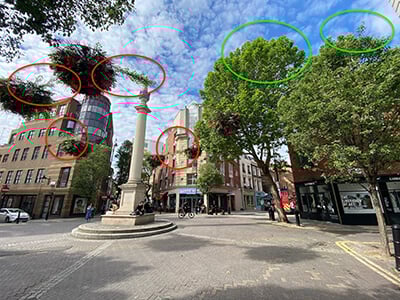
Another sign I love to see when I climb a big tree, is looking up and note the dimension of the leaves, if you see too much the sky, the tree is not in shape and you understand it needs your help as an arborist, maybe with a roots injection with biostimulant for more energy.
Trees like Fagus, Tilia, fraxinus, need to have the leaves of the right dimension because they need to protect the inside part of, like bark and keep the temperature inside the canopy under 30 degrees celsius otherwise the cholorophyll photosynthesis will stop over that temperature; so if we see leaves oversize we can understand that in that area the medium temperature are high in last 3 or 4 years.
At the end we can say that trees can help us to understand the world where we walk.”

You might also enjoy:
What are the Coloured Paint Marks on Trees?
EasyJet Calms Orographic Storms
How to Read a Tree – The Book