






We can sense invisible animals by keeping a look out for the ‘shimmy’.
The shimmy is my name for the way we can sense animals without setting eyes on them. Whenever an animal moves onto, along or off a small branch of a tree, their weight fluctuates and this sends waves down that branch, shaking all the leaves growing from it. It creates a signature motion, a shimmying that is distinctive, quite different to the broader vibrations we see when wind moves over plants. When wind hits trees, which it will do with increasing frequency over the coming weeks, we can watch it buffet the tops more than the lower branches, moving more quickly over the tops of the canopy than lower down. We can count many seconds between a sway from a gust on distant treetops and the wind we feel on our face, but each move across the land in broad sweeps, rustling foliage over wide areas. Our brain picks this up and recognises it instantly, pairing the sound and feel of the wind with the sight of thousands of leaves swooshing one way and then another.
When a narrow area of leaves moves, it must be caused by something much smaller and our ancestors recognised this ‘shimmy’ as a clue to animal activity. The fun starts when we don’t let our brain stop with the simple deduction, ‘animal’, and instead ask it for a fuller report – what sort of animal and what is it doing? With a little practice we start to recognise the pairing of certain movements in certain plants with certain animal behaviours. It is rare that I don’t sense a squirrel in my local woods, leaping from one hazel or beech branch to another. There is a different pattern, more urgent, but otherwise hard to describe, between the leap of a squirrel leaping because of my approach and one going about its daily business. The take-off and landing of a wood pigeon is a bolder, easier signature than a songbird. I believe this was once such a fundamental part of outdoor life because every animal sensing was once a vital part of our survival and for this reason, we can rekindle these skills faster than me might fear. Our brain is still wired to do this and, I believe, enjoys it; speaking personally I find a sense of positivity beyond flat satisfaction, nearer euphoria, when I sense an animal from its signature movement and a few seconds later a sighting confirms it.
A perch wobble – a bounce in a high branch – is a sign a bird of prey took off, whereas a stuttering, repetitive motion is more likely a mammal. Flickering ivy betrays the small bird.
In the video above, we can sense a very small animal is moving out of view but very near the centre of the picture. With practice we learn what animal causes this pattern of vibration in the bracken fronds; in this case it is a small bird, a wren.
We can sense visual and auditory shimmies and there are a few examples that peak at certain times of year, like spring or autumn. Birds that are either feasting on fruits or gathering seeds like acorns will be especially busy. Then there is the patter of raindrops falling from trees as animals move overhead. The rain is more frequent and the animals are busy foraging. A gust of wind releases a small torrent in the hours after heavy rain, a bird landing on a branch sends a gentler cascade. Somewhere between the two, rain falls by our feet as a squirrel leaps away across the canopy over our head. It is rainwater, but is it rain if it falls from the tree not the sky?
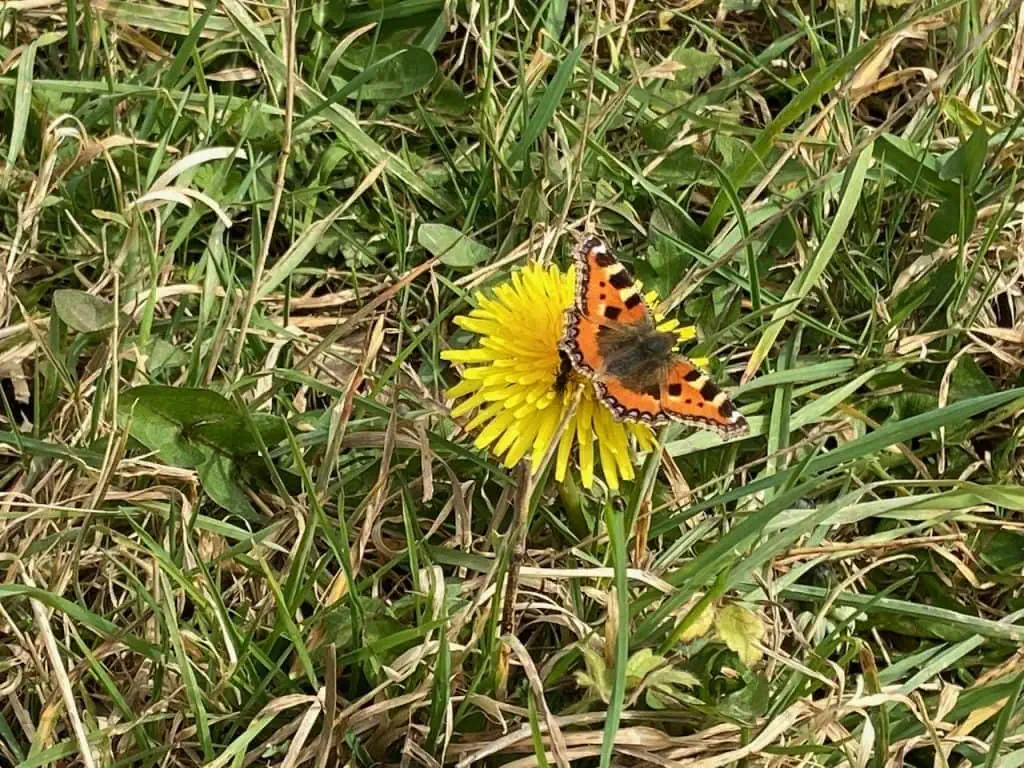
If we keep practising this gentle art, we learn to sense ever more delicate motions and detect ever more subtle animal habits. The slightest wobble of a flower after an insect takes off means the wind to most but a butterfly to some.
For more on the ‘shimmy’ and other similar techniques, please see my books: