







Rime Ice
There is a common type of icing that is regularly called frost, but is not formed in the same way.
Rime ice occurs when very cold airborne water droplets are blown onto very cold surfaces and freeze on contact. Since rime ice forms as a wind blows, it creates telltale asymmetries:
It is thicker and heavier on the windward side of any object it freezes on.
Sometimes this creates elaborate sculptures of ice, daggers or feathers that jut out in the direction the wind has come from. It can build up such thick layers that the weight can cause damage, as the naturalist W. P. Hodgkinson noted in 1946:
From The Eloquent Silence by W. P. Hodgkinson
‘The leaves, grass and twigs became encased in cylinders of ice, so that the trees swayed in the slightest breeze and gave out tiny tinkling sounds like so many glass chandeliers. The effect was fantastic and unforgettable. Many of the trees became so top-heavy that the branches fell to the ground under the tremendous burden of ice.
Rime ice is formed by a wind carrying air so cold and wet that it is normally foggy too. The icy fingers can be used to navigate as the direction they point will be consistent over wide areas. They have helped me on some natural navigation walks when visibility was poor – hundreds of cold white crystal fingers pointed the way.


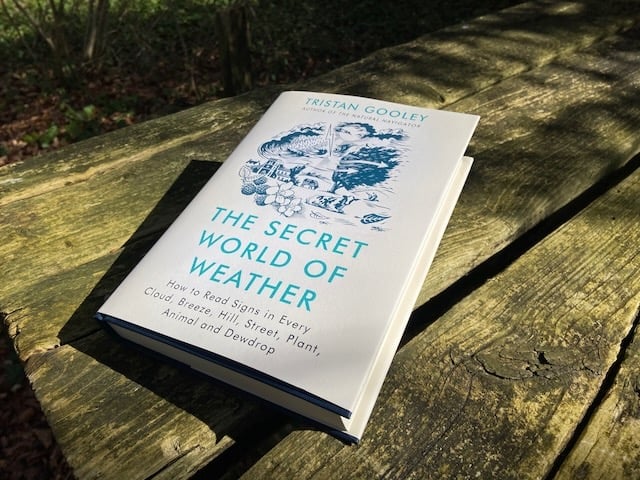
The above is an excerpt from The Secret World of Weather – The Book
You might also enjoy: