Welcome to the Natural Navigator

Wild Flowers

17 May 2011 by Tristan Gooley

I have been doing my best to research the preferences of wild flowers over the last couple of weeks, although writing deadlines have made it something of a sporadic affair. Mad dashes for fresh air and flowers, before it is time to confront the silver tyranny of the MacBook Pro once more.

I have not visited the area of wild flowers for a long time and it has been great fun to garner a few new observations. However, there will always remain hundreds of fascinating habits out there, waiting for the right moment to overcome their shyness and reveal all.

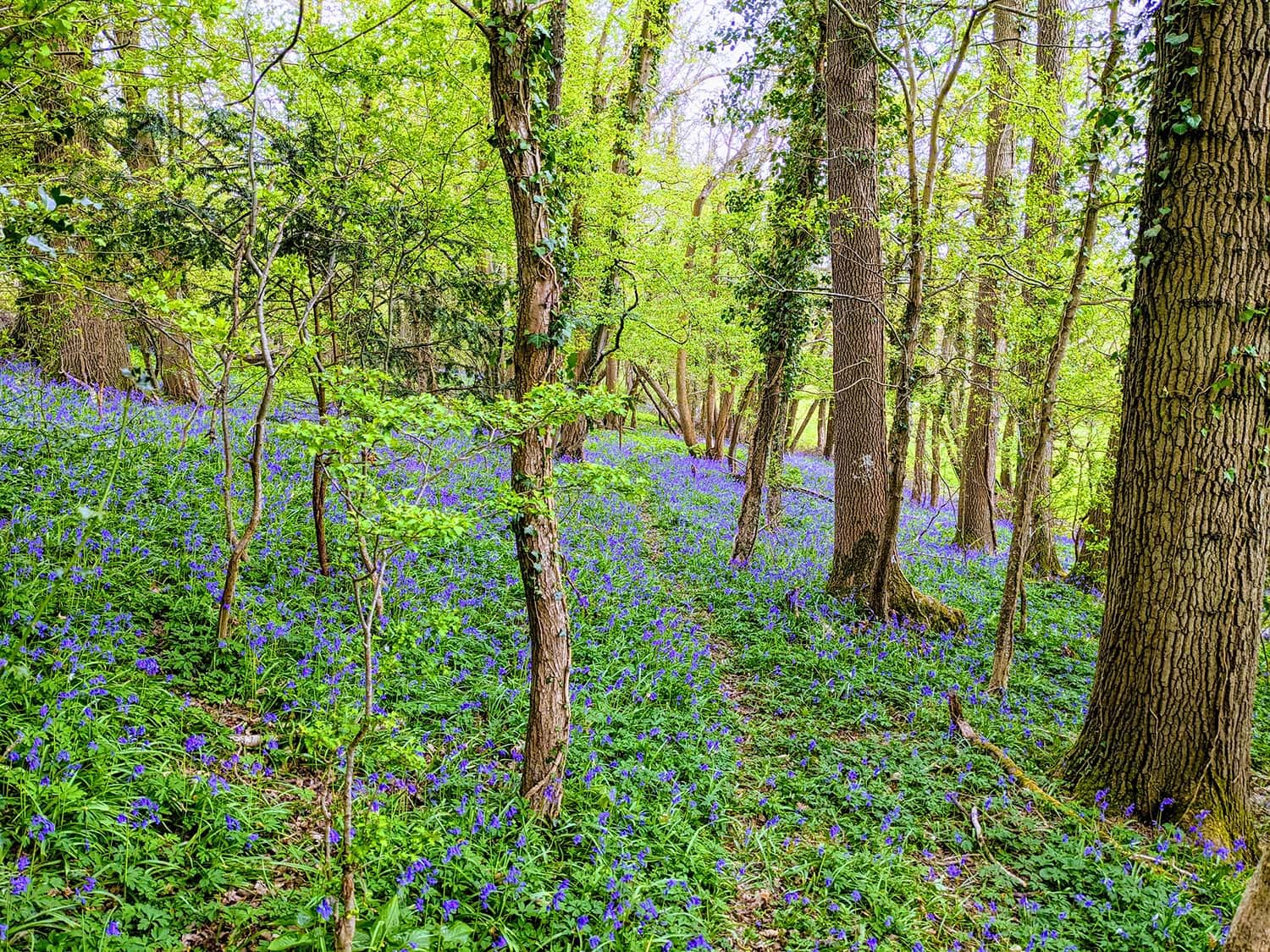
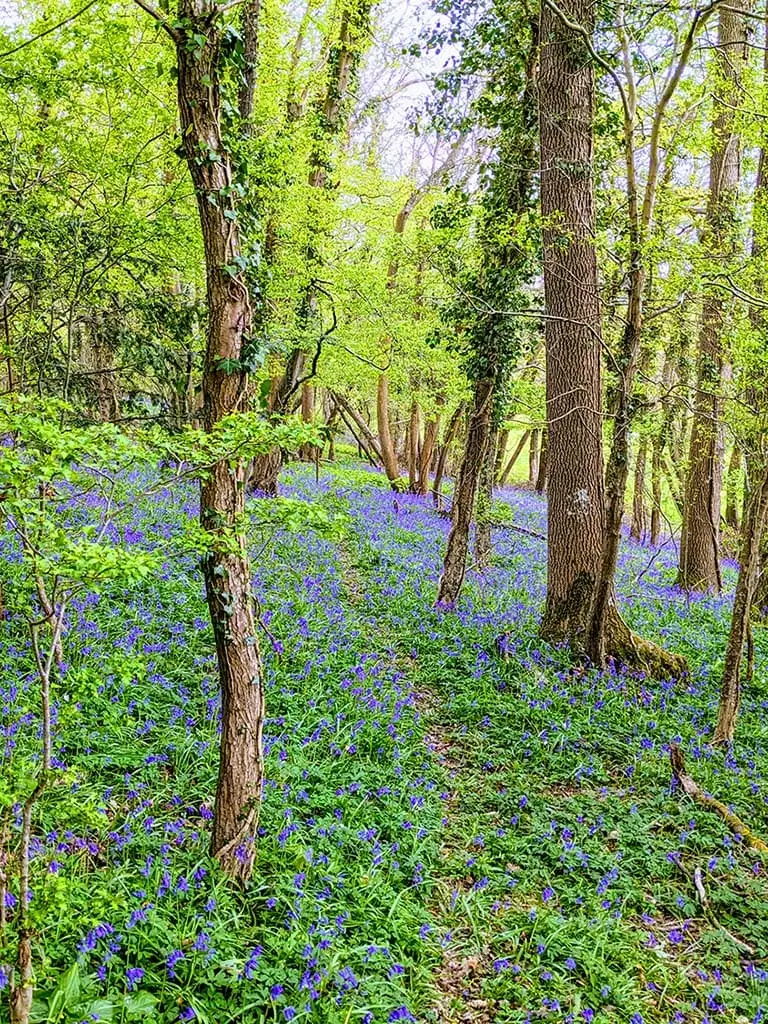
I have noticed that Speedwells, the blue four-petal flowers from the Veronica family, seem to have a preference for the west-facing and north-facing sides of paths in this part of the world. That is they can be found more commonly on the southern side of W-E paths and the eastern…

Read More...

Share and Enjoy:
  • Digg
  • Sphinn
  • del.icio.us
  • Facebook
  • Mixx
  • Google Bookmarks

Which way are we looking? Updated.

10 May 2011 by Tristan Gooley

My thanks to Mark Evans who not only flew over from Oman for a course, but also sent me this great time lapse photo from Oman.

Mark is the General Manager of Outward Bound Oman, which does not sound like the worst job in the world to me! Outward Bound Oman, under Mark’s leadership, is teaching young Omanis many outdoor skills, including traditional methods of desert navigation.

Time for a bit of fun. Which way are we looking in this picture and why?

Answers by email please. I’ll post the correct answer in a couple of days.

Update.12/05/11.

We are looking just south of west. approx 255 degrees. Orion’s belt can be seen setting about one third the way in from the right. The arcing to the right is anticlockwise around the North Celestial Pole, to the left the stars are arcing clockwise around the South Celestial…

Read More...

Share and Enjoy:
  • Digg
  • Sphinn
  • del.icio.us
  • Facebook
  • Mixx
  • Google Bookmarks

Finding South Using the Stars

09 May 2011 by Tristan Gooley

Finding South Using the Stars

In the northern hemisphere Polaris, the North Star, tends to get all the attention when it comes to finding direction using the stars. There is a good reason for this: it is easy to find and is very accurate. In the southern hemisphere the Southern Cross is used to find south and Polaris is not visible. But what about finding south in the northern hemisphere? The easiest thing is still to find Polaris and then look in the opposite direction, but what if we want a method that actually shows us south itself. Here is a nice simple and very unusual method that I invented a few years ago, which you can try this evening.

First you need to find the constellation Leo. It is a nice, big and easy to identify constellation which, unlike some constellations I can think of, looks at least…

Read More...

Share and Enjoy:
  • Digg
  • Sphinn
  • del.icio.us
  • Facebook
  • Mixx
  • Google Bookmarks

Thomas Manning

06 May 2011 by Tristan Gooley

Thomas Manning (1772-1840) was an eccentric academic and the first British traveller to reach Tibet. After donning a heavy disguise and much perseverance and patience he finally met the Dalai Lama, who was only seven years old at the time.

An excerpt from his account of his travels is a good reminder of how much better connected the travellers of old were to the incestuous relationship between the sun, time and direction.

We hurried into the town where we were to change
horses, but our haste was fruitless. There we were obliged to wait
until our baggage came up long, long after us, and until it was
adjusted upon fresh cattle. If we now had galloped all the way to
Lhasa the sun would have been in the south before we could have
been in the august presence of the Tagin. This was exceeding
discomfort to my Munshi, but great

Read More...

Share and Enjoy:
  • Digg
  • Sphinn
  • del.icio.us
  • Facebook
  • Mixx
  • Google Bookmarks

National Trust Outdoors Book of the Year

29 April 2011 by Tristan Gooley

The National Trust is asking people to vote for their favourite outdoors book, published in hardback or paperback in the UK, since January 2010.

It only takes 5 seconds to vote:

This could be lichened to an X-Factor for outdoors books and I thought it would be nice to sea if I could get the word out there. Of course it would be tree-mendous and I’d be over the moon, it really would be a very sunny day to see The Natural Navigator star in such a way, but I must be on another planet to think that it stands a chance.The question is not weather it should win, but whether anything can beat the old birds. There are one or two books that appear to be plants, that will probably win regardless of the voting and that would cast a terrible shadow on this whole thing. If you feel…

Read More...

Share and Enjoy:
  • Digg
  • Sphinn
  • del.icio.us
  • Facebook
  • Mixx
  • Google Bookmarks

Ocean Swell Navigation

28 April 2011 by Tristan Gooley

Last night I accidentally stumbled on one of the best images of ocean swell that I have come across. I was looking at Essaouira on Google Earth and happened to notice that the image showed some really clear swell patterns.

In this image we can see the sets of swell arriving from the top-left of the picture (northwest). We can then see the distinct and different patterns that are formed as these swells interact with Mogador island off the coast of Essaouira. The swell diffracts through the gaps either side of the island and then these two patterns meet again in a thin line that runs from the top of the island to the land just above the large breaking wave.

Down at sea level it takes a lifetime to interpret these patterns, but it is so much easier to see how the great Polynesian and Micronesian navigators would have…

Read More...

Share and Enjoy:
  • Digg
  • Sphinn
  • del.icio.us
  • Facebook
  • Mixx
  • Google Bookmarks

The New Forest

21 April 2011 by Tristan Gooley

My thanks to all who came to my talk at the Ringwood Travel Club last night.

It would have been rude to have driven through the New Forest yesterday and not stepped out into the sunny Forest itself, for a little wander and root about.

I found some interesting clues to direction, lots of the usual suspects and two new ones that I am looking forward to investigating further. I also came across this almost perfectly camouflaged insect. It was, the last time I looked, right in the centre of the photo. I have my theory, but I’m not certain what it is, so answers by email please.

Share and Enjoy:
  • Digg
  • Sphinn
  • del.icio.us
  • Facebook
  • Mixx
  • Google Bookmarks

The Colour of the Sea

19 April 2011 by Tristan Gooley

On one day during our holiday in Essaouira in Morocco, the sea did something spectacular. It turned red. A thick band, which ran right along the beach, turned uniformly brown-red overnight. The colour stopped abruptly about a couple of hundred metres out to sea. The following day the effect had disappeared.

The locals told me this was a regular effect of sediment from the nearby river. I could not get enough height for a perfect photo, but hopefully you can make out the sudden change from brown-red to blue-green in this image.

Changing subjects as fast as the sea off Essaouira, there was a lovely review of my book by an American newspaper over the weekend.

I would like to pretend that an English professor compares my writing to Thoreau’s every weekend, but the fact that I am actively considering tracking down all those English teachers, who, over the…

Read More...

Share and Enjoy:
  • Digg
  • Sphinn
  • del.icio.us
  • Facebook
  • Mixx
  • Google Bookmarks

Seed Pods

15 April 2011 by Tristan Gooley

My thanks to Richard Webber for spotting and snapping these seed pods in a tree. They have aligned with the prevailing southwesterly winds.

Share and Enjoy:
  • Digg
  • Sphinn
  • del.icio.us
  • Facebook
  • Mixx
  • Google Bookmarks

Sculptures in the Sand

05 April 2011 by Tristan Gooley

Each part of the world has its unique natural navigational heritage with distinct differences, making each appear totally foreign to the other on first meeting.

What could the Pacific Islanders possibly share with the Bedouin? Or the Vikings with someone going for a walk in an English wood? All these navigators share views of the sun, moon and stars, but all will also have a relationship with the wind. The wind sculpts the land and sea all over the world, it leaves its marks wherever we care to look for them. The swell of the oceans, the shape of the dunes and the curve of the exposed trees all betray their intimate relationship with the wind.

Here are some small sand sculptures that I photographed among the dunes on West Wittering beach a few weeks ago. The swell of the Pacific and the dunes of the Sahara are not…

Read More...

Share and Enjoy:
  • Digg
  • Sphinn
  • del.icio.us
  • Facebook
  • Mixx
  • Google Bookmarks
Page 5 of 45« First...34567102030...Last »

Welcome to the home of natural navigation on the Internet.

Natural navigation is the art of being able to find your way solely by using nature. It encompasses using the sun, moon, stars, weather, water, land, sea, plants and animals.

The Natural Navigator is the school set up by Tristan Gooley to research and teach natural navigation. It is also the title of his book on the subject.

If you would like to know more about natural navigation you can browse the website, read about Tristan’s natural navigation book, or listen to a BBC Radio 4 interview with Tristan.


Archives by Month:


Enter your email address:

Delivered by FeedBurner